Video Description
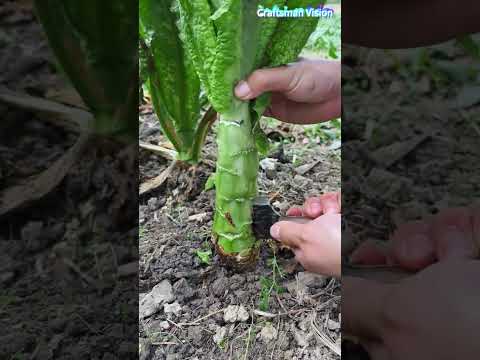
In the video, farmers are busy harvesting lettuce stems. Lettuce stems are common high-quality vegetables with crisp texture, fresh and refreshing taste, which can be eaten raw or cooked. Their yield and quality mainly depend on suitable planting conditions and scientific harvesting methods. Combined with the actual field operation scenarios, the planting technology and harvesting points of lettuce stems are as follows:
I. Planting Technology of Lettuce Stems
1.Plot and Soil Selection: Choose flat plots with sufficient light and convenient drainage and irrigation, preferably loam or sandy loam that is loose, breathable, and capable of retaining fertilizer and water. Deep plow about 25 centimeters, apply sufficient decomposed farmyard manure as base fertilizer, level and harrow the soil finely, then ridge for planting to prevent waterlogging and root rot.
2.Sowing and Transplanting: Seedling transplanting is mostly adopted. Transplant when the seedlings have 4-5 true leaves, with a plant-row spacing of 25×30 centimeters. Water thoroughly with setting root water in time after transplanting to promote seedling establishment. For direct seeding, spread the seeds directly, cover with a thin soil layer of about 1 centimeter, and keep the soil moist.
3.Field Management: Keep the soil moist during the growth period, avoid waterlogging, and water frequently with a small amount of water in dry seasons. Topdress with thin fertilizer 1-2 times after transplanting, promote stem and leaf growth in the early stage, focus on supplementing potassium fertilizer in the later stage, and avoid excessive application of nitrogen fertilizer which may lead to excessive growth. Timely remove weeds in the field, targetedly prevent and control downy mildew and aphids, and give priority to physical control.
II. Key Harvesting Points of Lettuce Stems
1.Grasp the Harvesting Time: 35-45 days after transplanting, when the lettuce stems are fully expanded, the internodes are dense, the plant height is 40-50 centimeters, and the leaves are fresh green without yellowing, it is the best harvesting period. At this time, the taste is crisp and the quality is the best.
2.Standardize Harvesting Operations: Use a sharp tool to cut off from the base of the plant, retain a small number of outer leaves to protect the lettuce stems from damage and improve the appearance. Harvest gently to avoid extrusion and collision, which may cause rot of the lettuce stems.
3.Post-Harvest Treatment: Timely remove damaged and yellow leaves, clean the soil on the roots, and no excessive cleaning is needed. For short-term preservation, it can be placed in a cool and ventilated place; for long-term preservation, it can be put into a fresh-keeping bag and refrigerated to extend the preservation period.