Video Description
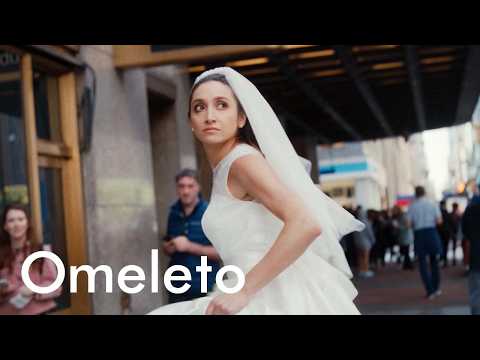
A bride runs away.
It's her wedding day, and Ella is running away. She leaves the church, jumps on the subway, finds some money, and eats a snack. And then she finds herself at her ex Charlie's loft apartment in the city, and though it seems empty, she lets herself in with the hidden spare key.
When he comes home, Charlie isn't thrilled to discover Ella in his living space, but he tries to be polite. As they navigate the awkward situation, their unfinished business comes to the fore -- both the former couple's in the past and Ella's complicated truths in the present day.
Directed and written by Gabriella Kessler, this short romantic dramedy is a sharp-eyed, witty portrait of a young woman in freefall. We first meet Ella as she makes a break for it on her wedding day, fleeing the grand cathedral of her wedding venue for the city streets. The initial pacing is jazz-like and fast-paced, and the dynamic, naturalistic storytelling zips through a series of visual postcards with a sense of whimsy and exhilaration, as Ella runs, takes the subway, eats a snack and is flipped the bird by a cute but savage girl ballerina. It's charming, fun and a little rough around the edges, just like New York City itself, and Ella as a character evokes urban free spirits like Holly Golightly or Carrie Bradshaw.
But when Ella lands at Charlie's apartment, the film shifts to a more contemplative register. She initially uses Charlie's home for a bathroom break, entering with the help of a spare key, but when Charlie discovers her there, the pair find themselves pulled into a complicated emotional pas-de-deux. The intricate dialogue lets us in on their complex history together, deploying allusion more than exposition to paint a picture of past attraction and current resentments.
The performances by Kessler and Jens Austin Astrup have a freshness and immediacy, and the air between them is charged with both hostility and something else. That electricity builds anticipation, as Ella confronts the question of how far she will go to claim her freedom and eschew certainty. But it's not just a romantic question, but an existential one, as she stares down the barrel of another choice and its potential consequences. And when Charlie asks if he should keep going, the stakes of that decision dawn on her, as Ella confronts the question of what she really wants. With such philosophical weight, the ending of I DON'T refuses easy, tidy answers, but it does help transform the film into a thoughtful character portrait of a young woman overwhelmed by her freedom, but perhaps realizing for the first time that no partnership, relationship or commitment can take the place of genuine self-knowledge.
I DON'T. Courtesy of Gabriella Kessler at https://gabriellakessler.me.