Video Description
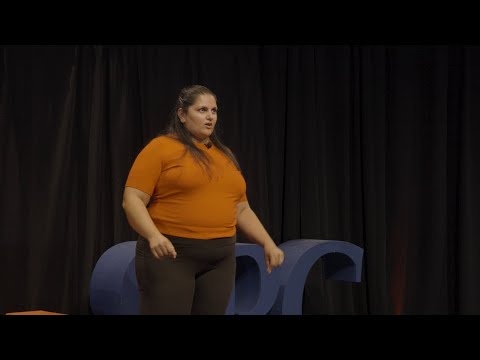
In CheerGPT: Prompting Failure, amateur philosopher Wishy Kane examines what we lose when we ask machines to do the feeling, growing, and living for us. The talk begins with a charming story of young love that derails sharply into the absurd, as generated wedding vows illustrate how smart technology can distort and even parody human sincerity. As the talk progresses, Wishy poses a quick question to the audience about their AI use: “Does this humanize me, or does it un-humanize me?” Wishy then argues that effort, failure, and risk are not inefficiencies to optimize, but the texture of life worth defending. The talk shows how AI doesn’t threaten jobs, income, and output, but the opportunity to become who we are. Wishy argues that failure is not an obstacle people face – it is the membership fee of personhood itself. Drawing from multiple fields, Wishy speaks not from an anti-tech standpoint, but a pro-person one. She underlines that we are on the edge of a new era, and our development as people, particularly the next generation’s development as adults, stands to lose not just moments but the meaning behind them. The talk demands we consider whether we are sacrificing our humanity as the price of optimization without considering what makes our humanity what it is. In the end, CheerGPT is a story that asks us to embrace radical acceptance of – and radical support for – failing out loud, on purpose, especially when tempted by comfortable shortcuts. Wishy Kane is an early-career philosopher, proud St. Petersburg College alumna, and mother. She studies Philosophy and Economics at Arizona State University, focusing on evolutionary medicine, ethics, politics, and law. Her projects span ethical wheelchair design, community economic proposals, and inquiries into health technology and AI. A fierce advocate, she works to raise ethical baselines in medical technology and insists that ethics is not only what we can write, but what we can right. This talk was given at a TEDx event using the TED conference format but independently organized by a local community. Learn more at https://www.ted.com/tedx