Video Description
A young girl worries.
Prisca lives with her extended family in Kinshasa, watchful and quiet amidst the crowded home. She has an especially tender relationship with her aging grandmother Suzanne, but when Suzanne begins acting strangely, the home becomes rife with tension, as the family worries that Suzanne is cursed.
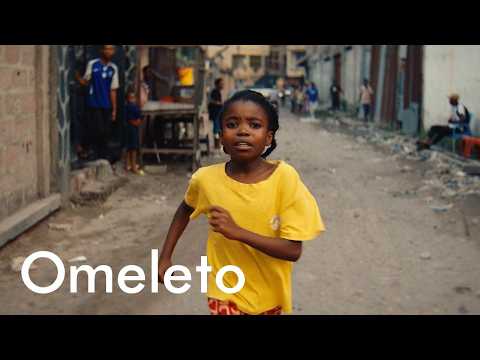
Prisca's father takes his mother to see a neurologist, who recognizes that Suzanne has dementia. But the shroud of superstition is hard to shake off, even in the face of modern medicine, and when the family hits a point of crisis, Prisca must navigate the streets of Kinshasa to protect the grandmother she knows and loves.
Directed by Zach Bandler and written by Zach Bandler and Emmanuel Epenge, this powerful short drama is a portrait of a family struggling with dementia, told through the compelling lens of modern Congolese culture and society. Shot with a primarily Congolese crew and cast on location in the Barumbu neighborhood of Kinshasa in the Democratic Republic of the Congo, the narrative is told through the eyes of its observant, sensitive young protagonist, a loving granddaughter observing the tension between modern science and ancient superstition. The arc of Prisca's journey navigates this tension, as she tries to decide the truth behind her grandmother's mysterious, strange behavior.
This tension also informs the film's exceptional visuals, which blend both sensitive, lived-in family drama with elegantly eerie horror. The colors can veer between muted naturalism and saturated stylization; the camera movement and composition toggle between observational reportage and a haunting drift. Like Prisca, we experience Suzanne's erratic, sometimes frightening behavior as sometimes supernatural in feeling, or as a more matter-of-fact condition rooted in realism and science.
The heart of the film is the tenderness between Suzanne and Prisca, played beautifully by actors Clothilde Masele Liluku and Alphie Lotawa, respectively. The pair ground the film in a relatable emotional situation, where a young girl is frightened by her grandmother's changes in personality and temperament. Prisca's father takes Suzanne to the doctor and gets a diagnosis and a treatment plan, but even armed with this knowledge, the family and society at large have a hard time shedding the old way of thinking. This gap puts Suzanne in danger, and Prisca takes it upon herself to save her.
As our population ages, dementia will likely touch all of our lives in some way, and KOKO SUZANNE aims to broaden awareness and spark dialogue and change about the condition, especially where many living with dementia are rarely diagnosed and treated. Co-writer Emmanuel Epenge -- who plays the doctor in the film -- is himself a neurologist who is leading efforts in the Democratic Republic of the Congo to transform attitudes and awareness of dementia. Based on true events, Prisca and Suzanne's story ends with an aching devastation, but the film's compassion, emotional pull and exceptional craft linger well after viewing, fostering more empathetic perceptions of those living with age-related disabilities.
KOKO SUZANNE. Courtesy of Zach Bandler at https://kokosuzanne.org.