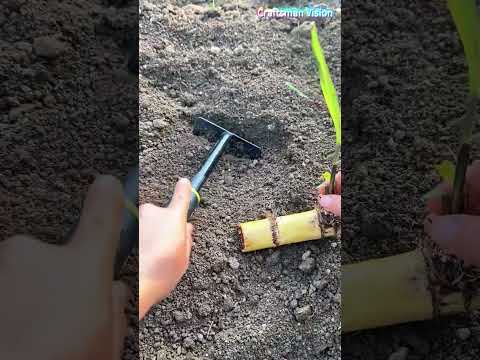
Video Description
This video introduces the planting technology for high-quality yellow sugarcane. Yellow sugarcane features thin, crisp peels and sweet, juicy flesh. It enjoys great market advantages and high planting returns, with vigorous growth and wide adaptability. To grow high-quality sugarcane with thick stalks, high sugar content and good appearance, four key procedures must be well controlled: site selection and planting preparation, field management during the growth period, scientific harvesting, and post-harvest finishing and preservation. The detailed technical points are as follows:
1. Site Selection and Planting Preparation
Yellow sugarcane has developed root systems, a long growth cycle and high demand for water and fertilizer. It is suitable for planting in deep, loose, fertile sandy loam or loam soil with good water and fertilizer retention and smooth drainage to prevent root rot from waterlogging. Before planting, deeply plow and refine the soil, and apply sufficient decomposed organic fertilizer combined with compound fertilizer as base fertilizer to supply adequate nutrients for seedling growth. Select high-quality sugarcane seeds with plump buds, no pests and diseases, and sturdy stalks to ensure neat seedling emergence and uniform growth.
2. Field Management During Growth Period
During the seedling stage, timely check and supplement seedlings, remove weeds and loosen the soil to avoid nutrient competition and promote root growth. The elongation stage is critical for yield and quality improvement. Apply topdressing in multiple batches. Nitrogen fertilizer is mainly used with phosphorus and potassium fertilizer to boost stalk expansion in the early stage; additional potassium fertilizer is applied in the later stage to improve sugar content and disease resistance.
Keep the soil moist but not waterlogged. Irrigate in dry weather and dredge ditches for drainage in rainy seasons to avoid root rot and lodging. Conduct multiple soil hilling during the growth period to thicken the soil layer, stabilize plants and prevent lodging in the middle and late growth stages.
3. Scientific Harvesting for Quality Assurance
Sugarcane is ready for optimal harvesting when the stalks turn fully golden with uniform internodes and firm, sweet flesh. Adopt batch harvesting: harvest mature plants first and reserve immature ones for continuous growth to improve overall yield and quality.
Cut the stalks flat and low close to the ground with neat incisions to avoid stalk tearing and root damage. Prevent stalk collision and bending during harvesting to avoid peel damage that spoils appearance and storage tolerance. After harvesting, remove cane leaves and root hairs, cut off the aged top and bottom parts, and retain intact high-quality stalks.
4. Post-harvest Finishing and Preservation
Clean surface dirt of trimmed sugarcane and wipe dry without excessive washing. For short-term sales, stack sugarcane neatly in a cool, ventilated and dry place away from light. For long-term storage, take moisturizing measures to isolate dry air, preventing stalk water loss, hollowness and peel wrinkling, so as to fully retain the original sweet taste and fresh appearance of yellow sugarcane.