Video Description
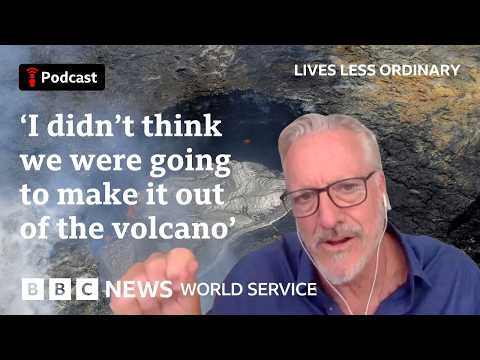
Cinematographer Chris Duddy has worked on some of Hollywood’s biggest movies like Titanic and Terminator 2. Filming in extreme conditions is part of his job, and he loves it, but nothing could prepare him for the day the helicopter he was in crashed inside the crater of an active volcano.
Click here to subscribe to our channel ?? https://bbc.in/3VyyriM
It was November 1992 and he was flying over the Big Island of Hawaii shooting footage for the end of the Hollywood thriller Sliver. The shot involved flying over the active Kīlauea volcano, but during filming the helicopter suffered total engine failure and crash-landed inside the Puʻu ʻŌʻō vent of the volcano.
Chris, along with his director of photography Mike Benson and the pilot Craig Hosking, were trapped there – 300 feet down and perilously close to a lava pool. Choking on toxic fumes and enduring bizarrely freezing temperatures when the weather closed in, Chris had to spend an entire night in the volcano, and the next day decided his only option was to climb out of the crater to escape. Although he risked falling into the lava pool below, he somehow found the superhuman strength to make it out, but what had happened to his two companions?
Presenter: Asya Fouks
Producer: June Christie
Video Producer: Beatrice Guzzardi
00:00 Coming up in this episode
00:37 Introduction
01:07 Filming from the helicopter
03:06 Good luck ceremony before takeoff
04:09 The moment of the crash
06:15 Stuck inside the volcano
09:19 First rescue attempt
11:14 Spending the night inside the volcano
15:43 The second rescue attempt
17:14 Climbing out of the volcano
20:03 Making it out of the volcano
22:53 How Craig got out of the volcano
24:04 Lasting physical effects of being inside a volcano for so long
24:48 The media attention
27:00 Reflecting on how Chris got out of the volcano
27:43 Getting on a helicopter again
28:58 Continuing to shoot dangerous scenes
30:57 Outro
Watch more from Lives Less Ordinary on our YouTube playlist ?? https://youtube.com/playlist?list=PLz_B0PFGIn4fxldjnO2SAJ-Lg-owG7RR_&si=sw23069eN__UaEmf
----------------
This is the official BBC World Service YouTube channel.
If you like what we do, you can also find us here:
Instagram ?? https://www.instagram.com/bbcworldservice
Twitter ?? https://twitter.com/bbcworldservice
Facebook ?? https://facebook.com/bbcworldservice
BBC World Service website ?? https://www.bbc.co.uk/worldserviceradio
Thanks for watching and subscribing!
#BBCWorldService #WorldService #volcano #crashsurvival