Video Description
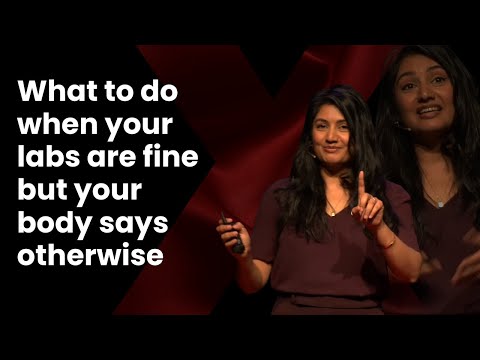
In her talk Anne explains why it is important for women to take control over their own treatment by tracking the changes in their health and their body because medical tests only capture a snapshot - they don't capture a tread or hormone changes that are dynamic. Citations in this talk: 1. "Canadian women spend 24 percent more time than men in poor health and with varying degrees of disability." McKinsey Health Institute. (2025). Closing the women's health gap: Canada's $37 billion opportunity. McKinsey & Company. https://www.mckinsey.com/mhi/our-insights/closing-the-womens-health-gap-canadas-37-billion-dollars-opportunity 2. “No abnormalities of ovarian hormone levels have been consistently identified that distinguish women with PMDD [premenstrual dysphoric disorder] from those women who experience no mood or behavioral symptoms during the luteal phase… The change in ovarian steroids [estradiol and progesterone] contributes to the onset of negative affective symptoms.” Schmidt PJ, Martinez PE, Nieman LK, Koziol DE, Thompson KD, Schenkel L, Wakim PG, Rubinow DR. Premenstrual Dysphoric Disorder Symptoms Following Ovarian Suppression: Triggered by Change in Ovarian Steroid Levels But Not Continuous Stable Levels. Am J Psychiatry. 2017 Oct 1;174(10):980-989. PMID: 28427285. https://pmc.ncbi.nlm.nih.gov/articles/PMC5624833/#S12 3. "Changes in ovarian hormones across the menstrual cycle represent a key biological source of symptom variability in psychopathology among many individuals assigned female at birth." Peters JR, Schmalenberger KM, Eng AG, Stumper A, Martel MM, Eisenlohr-Moul TA. Dimensional Affective Sensitivity to Hormones across the Menstrual Cycle (DASH-MC): A transdiagnostic framework for ovarian steroid influences on psychopathology. Mol Psychiatry. 2025 Jan;30(1):251-262. PMID: 39143323. https://pmc.ncbi.nlm.nih.gov/articles/PMC12053596/#S6 4. "Addressing the 25 percent more time that women spend in “poor health” relative to men not only would improve the health and lives of millions of women but also could boost the global economy by at least $1 trillion annually by 2040." https://www.mckinsey.com/mhi/our-insights/closing-the-womens-health-gap-a-1-trillion-dollar-opportunity-to-improve-lives-and-economies Anne Hussain is a naturopathic doctor, Menopause Society Certified Practitioner, and the author of The Period Literacy Handbook. Her passion for empowering and educating menstruators stems from her personal journey with PCOS and a lack of reproductive health education while growing up in Karachi, Pakistan. In her work and on her podcast, Phase to Phase: The Hormone Health Show, Anne advocates for body literacy and addresses the widespread health misinformation that plagues the online world. A sought-after speaker for public, corporate, non-profit, and clinical audiences, her expertise in hormonal health has been featured on CTV News and Global News. Anne believes that understanding the multifaceted nature of your health is a powerful tool for demanding better care and shaping a healthier world. This talk was given at a TEDx event using the TED conference format but independently organized by a local community. Learn more at https://www.ted.com/tedx