Video Description
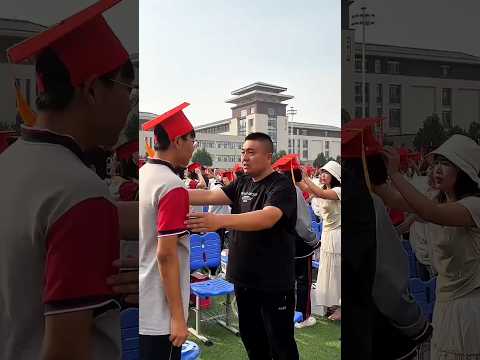
At the 18-year-old coming-of-age ceremony, the child had already grown taller than his father, yet he lowered his head so his father could place the成人帽 on him. In that moment, the father’s eyes filled with tears.
A child’s 18th birthday is also the parents’ 18 years of devotion. At this moment, it felt as though everything had been worth it.
?? 这一传统起源于中国古代男子的“冠礼”,是儒家伦理中最重要的仪式之一,象征着从无忧无虑的童年迈向肩负责任的成人世界。
?? This tradition originates from the ancient Chinese male rite known as “Guanli” (冠礼), one of the most important rituals in Confucian ethics, symbolizing the transition from carefree childhood into the responsible world of adulthood.
?? 这一传统可以追溯到周朝(2500多年前)。
?? This tradition dates back to the Zhou Dynasty (more than 2,500 years ago).
?? 最初,它是在20岁时举行的,但在现代中国,人们通常在18岁举行,以对应法律意义上的成年。
?? Originally, it was held at the age of 20, but in modern China it is commonly celebrated at 18 to coincide with legal adulthood.
?? 仪式最核心的部分,是戴上帽冠。
?? The central moment of the ceremony is the placing of the cap or crown.
?? 在古代,这一过程分为三个阶段,每次佩戴不同的帽子,分别象征自立能力、服务社会以及参与宗教礼仪的资格。
?? In ancient times, this process took place in three stages, each involving a different hat symbolizing the ability to support oneself, service to society, and participation in religious rites.
?? 如今,父亲为孩子戴上“成人帽”,象征着他作为导师,正式承认儿子已经成为可以平等对话的成年人。
?? Today, when the father places the “coming-of-age cap” on his child, he takes on the role of mentor, officially recognizing his son as an equal adult.
?? 仪式结束后,青年不再被允许像孩子一样行事。
?? After the ceremony, the young man is no longer allowed to behave like a child.
?? 他会获得“字”(表字、尊称),并被视为家族荣誉的守护者。
?? He receives a “zi” (courtesy name or honorary name) and is regarded as a guardian of the family’s honor.
?? 在父亲面前低头,是对童年服从的最后一次承认,随后便要以独立男子的身份挺身而立。
?? Bowing the head before the father is the final acknowledgment of childhood obedience before standing upright as an independent man.
??「成熟并非来自年龄,而是来自对养育自己之人的责任理解。」——中国谚语
?? “Maturity does not come with age, but with understanding the duty owed to those who raised you.” — Chinese proverb
?? 相似的故事
?? Similar stories
?? 孔子幼年丧父,不得不独自经历人生的艰难,最终成为“君子”的典范。
?? Confucius lost his father at an early age and had to face life’s hardships alone, eventually becoming the model of a “junzi” (noble person).
?? 他的思想将成年礼视为社会秩序的根基,因为他认为,如果年轻人无法理解成长与责任的意义,就无法建立稳定的家庭与国家。
?? His teachings regarded the coming-of-age ritual as the foundation of society, believing that if a young person could not understand the meaning of transition and responsibility, they would never build a stable family or nation.
?? 21世纪初,中国学校开始大规模复兴这些传统仪式。
?? At the beginning of the 21st century, Chinese schools began reviving these traditional rituals on a large scale.
?? 成千上万个家庭聚集在体育场共同举行“冠礼”的故事,展现了现代社会如何在数字时代的孤独中,重新寻找古老价值观带来的情感依托。
?? Stories of thousands of families gathering in stadiums to perform “Guanli” show how modern society seeks emotional grounding in ancient values to cope with the isolation of the digital era.
?? 伟大的历史故事
?? Great historical stories
?? 康熙皇帝8岁登基,但他真正的成人礼,是亲自铲除权臣鳌拜、掌握实权的那一刻。
?? Emperor Kangxi ascended the throne at the age of 8, but his true rite of adulthood came when he removed the regent Oboi and took real power into his own hands.
?? 尽管年纪尚轻,他依然展现出“钢铁般的意志”,证明成熟不仅是年龄的问题,更是是否能够承担帝国重任的问题。
?? Despite his young age, he demonstrated an “iron will,” proving that maturity is not merely a matter of age, but the ability to bear the weight of an empire.
?? 在中世纪欧洲,“授剑礼”与中国的冠礼拥有相似的精神意义。
?? In medieval Europe, the “accolade” ceremony carried the same psychological meaning as the Chinese Guanli.
?? 父亲或领主会用剑轻触年轻骑士的肩膀,以提醒他:这是他最后一次在不反击的情况下接受羞辱,因为从这一刻起,他将成为弱者的守护者与荣誉的捍卫者。
?? The father or lord would touch the young knight’s shoulder with a sword to remind him that this was the last insult he would accept without retaliation, because from that moment onward he would become a protector of the weak and a guardian of honor.
#爱 #成人礼 #父爱如山 #感恩心 #文化传承 #Love #ComingOfAge #FatherlyLove #Gratitude #CulturalHeritage