视频说明
True value isn't always found in today’s bottom line, but in the potential to redefine an entire industry. In the early days of tech, the market wasn't looking at who was making a profit right now; it was looking at who had the architecture to own the future. A company can lose millions in its infancy and still be worth billions if it is building the digital infrastructure that will eventually make every legacy player obsolete.
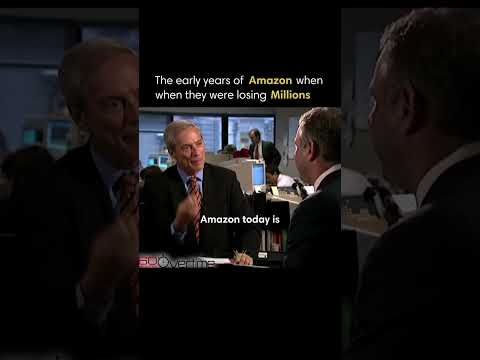
Back in the late 90s, Amazon was a massive financial anomaly. Despite losing $125 million in a single year and never making a dime of profit, its market value remained sky-high. Skeptics laughed, claiming the company would need to sell every book on the planet just to justify its valuation. Yet, even then, Amazon’s market capitalization was 20% higher than Sears, the retail titan of previous generations. Investors were betting on a revolution led by "geeks" with software and microprocessors—tools that proved powerful enough to dismantle an empire like Sears Roebuck.
Technology has a unique way of making the "impossible" inevitable. While traditional businesses focus on protecting what they’ve already built, innovation focuses on what hasn’t been done yet. The microprocessor didn’t just change how we calculate; it changed the very nature of competition. History is a cycle of one thing supplanting another, and the biggest risk isn't losing money in the short term—it’s ignoring the software revolution that is quietly sketching out the end of your industry.
Subscribe to @thewealthrive to grow smart every day.
#Amazon #JeffBezos #TechInnovation #wealth #financialfreedom