影片說明
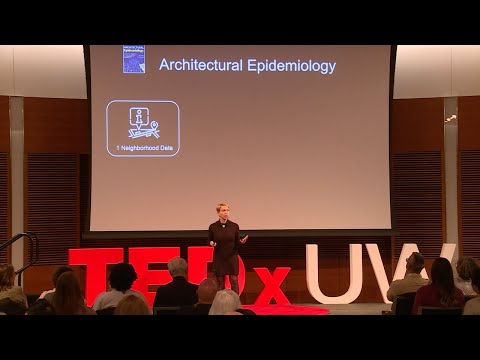
We live in a split screen society. Nationally, we agree that we need to build more housing, more transmission lines, more transportation infrastructure. But, when we learn about developments proposed for our own neighborhood, our first reaction is often negative. This TED talk unpacks the reason for this disconnect and offers architectural epidemiology as a solution. When we use data to guide design conversations with the community, we can speed the permitting process by turning a new development from a cause for community concern into a cause for celebration. Adele Houghton, FAIA, DrPH, LEED AP, is President of Biositu, LLC where she works at the intersection of buildings, public health, and climate change. She is a member of the American Institute of Architects College of Fellows and received a Doctor of Public Health (DrPH) degree from the Harvard T.H. Chan School of Public Health, where she also teaches. Her book Architectural Epidemiology (Johns Hopkins University Press, 2025), co-authored with Professor Carlos Castillo-Salgado of Johns Hopkins University, proposes a novel method for architectural design: combining neighborhood-scale environmental health data with participatory community engagement to maximize a building’s positive ripple effect on community and planetary health. This talk was given at a TEDx event using the TED conference format but independently organized by a local community. Learn more at https://www.ted.com/tedx