影片說明
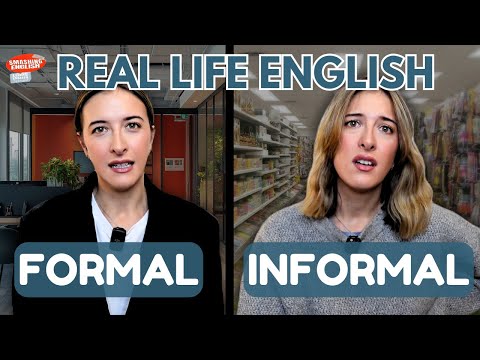
What are the real differences between formal and informal English? Watch this video to find out!
------------------------------
? Check out all our amazing English courses at smashingenglish.com ?⭐️
-------------------------------
⭐️ Become a member today! Receive amazing perks and smash your English goals! ⭐️
https://m.youtube.com/channel/UCP68LAhxzwC2WMO33bGRtFQ/join?cbrd=1&noapp=1
-------------------------------
If you would like a one to one English lesson with us, click here!
smashingenglish.com/book
-------------------------------------
Follow our Instagram:
@smashing.english
------------------------------------------------------------------------------------------------------------------
Subscribe for more videos!
Music:
––––––––––––––––––––––––––––––
Music: Postcards by Snoozy Beats / snoozybeats
License: Creative Commons — Attribution 3.0 Unported — CC BY 3.0
Free Download / Stream: https://audiolibrary.com.co/snoozybea...
Music promoted by Audio Library: • Lo-fi, Jazz, Hop No Copyright Music | Post...
––––––––––––––––––––––––––––––
––––––––––––––––––––––––––––––
Music: chimes by Snoozy Beats / snoozybeats
License: Creative Commons — Attribution 3.0 Unported — CC BY 3.0
Free Download / Stream: https://www.audiolibrary.com.co/snooz...
Music promoted by Audio Library: • Lofi, Jazzy, Chill No Copyright Music | ch...
––––––––––––––––––––––––––––––
Understanding the difference between formal and informal English is essential for ESL learners who want to communicate clearly and confidently in real life. English changes depending on the situation, the relationship between speakers, and the purpose of communication. Formal English is often used in professional, academic, or official contexts, while informal English is common in everyday conversation, social media, and casual speaking. Learning how these styles differ helps English learners choose the right words, tone, and grammar for any situation.
Formal English usually sounds more polite, careful, and structured. It is common in business English, academic writing, job interviews, presentations, reports, and professional emails. Sentences in formal English tend to be longer and more complete, with fewer contractions and less emotional language. Vocabulary is often more precise and less common in daily speech. Informal English, on the other hand, is relaxed and friendly. It is used with friends, family, classmates, and coworkers in casual situations. Informal language often includes contractions, simple sentence structures, and everyday vocabulary that sounds natural in conversation.
One major difference between formal and informal English is word choice. Formal language avoids slang, abbreviations, and casual expressions, while informal English uses them freely. Phrasal verbs, idioms, and conversational phrases are very common in informal speech. Grammar also changes depending on formality. Informal English allows shorter sentences, dropped words, and flexible structures, especially in speaking. Formal English follows standard grammar rules more strictly, which is important in writing and professional communication.
Tone and register also separate formal and informal English. Formal communication sounds respectful and distant, while informal communication feels personal and direct. ESL learners often struggle with this difference because textbooks usually focus on formal grammar, but real-life English is often informal. Understanding both styles helps learners sound more natural in conversations while still being professional when needed.
Mastering formal versus informal English improves listening skills, speaking confidence, reading comprehension, and writing accuracy. It helps English learners succeed in exams, workplaces, universities, and daily interactions. By recognizing when to use formal English and when informal English is appropriate, ESL students can avoid misunderstandings and communicate more effectively. Learning this difference is a key step toward fluency and natural English communication.