影片說明
Try 2 weeks free of our nutrition and workout coaching app: https://bws.plus/6a
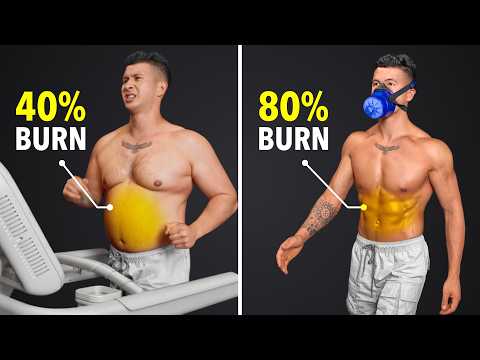
Cardio is one of the most misunderstood parts of fitness, and despite how much information is out there, many myths still refuse to die. In this video, I put the biggest cardio myths to the test using real data, controlled experiments, and gold-standard calorie and fat-burn tracking. We'll go through cardio myths like cardio vs diet, cardio for fat loss, best cardio workout, cardio vs weights, HIIT cardio vs steady state cardio, 10,000 steps per day - and more.
Thanks to Dr. Marc Lewis for helping with Myth 10: Instagram @marctlewis
We started with one of the most common beliefs: that walking isn’t “real” cardio and can’t improve conditioning. To test this, my editor Andy followed a simple walking routine for two weeks. Before and after, we measured his fitness using VO₂ max and submaximal testing. Even in just 14 days, his VO₂ max improved and his heart became more efficient at the same workloads. For someone who was previously sedentary, this actually reversed the normal age-related decline in fitness and noticeably improved how he felt day to day.
Next, we tested whether sweating more during a workout actually means you’re burning more fat. Using a metabolic cart, we had a subject cycle at the same intensity in both a cool environment and a hot, high-sweat environment. Despite feeling much harder and producing far more sweat, the hotter workout did not burn more calories or fat. In fact, performance slightly dropped. Sweat is mainly a cooling response, not a signal of fat loss.
Another popular belief is that you can eat back whatever calories you burn through exercise. After measuring how many calories our subjects actually burned, we asked them to build a plate of food they thought matched that number. They significantly overestimated their calorie burn, even before accounting for the body’s tendency to compensate by moving less afterward. This helps explain why cardio alone often leads to far less fat loss than people expect.
We also tested how reliable fitness trackers really are. By comparing an Apple Watch against a metabolic cart across multiple workouts, we found that wearables aren’t useless, but their accuracy varies depending on the activity. On average they were reasonable, but individual workouts could be meaningfully off, making them unreliable for precise diet decisions.
The idea that you need exactly 10,000 steps per day was next. While higher step counts are associated with better health, the data shows most benefits level off closer to about 7,000 steps. More can help, but 10,000 isn’t a magic number.
We then tested the “fat-burning zone” myth. Zone 2 cardio does burn a higher percentage of fat during the workout, but when total daily energy use is considered, fat loss is driven by total calories burned, not the zone itself. Zone 2 is excellent for endurance and recovery, but it isn’t a shortcut to fat loss.
Running is often assumed to be far superior to walking, so we compared both over the same distance. While running burned more calories per minute, the total calories burned were surprisingly similar. This helps explain why research shows walking and running can be equally effective for fat loss when consistency is matched.
We also tested whether cardio has to last 20 minutes or longer to matter. Research on “exercise snacks” shows that very short, high-effort bouts spread throughout the day can significantly improve fitness. Longer sessions are still valuable, but time-efficient options absolutely work.
Another concern is whether too much cardio kills muscle gains. Looking at research and real-world athletes who perform large amounts of conditioning while staying extremely muscular, we found cardio doesn’t inherently burn muscle. Problems only arise when recovery and nutrition aren’t managed properly.
Finally, we tested whether cardio is better than strength training for fat loss. Cardio burns more calories during the workout, but without resistance training, more weight tends to come from muscle. Strength training helps preserve lean mass and improves long-term body composition when paired with cardio.
After all the testing, the biggest takeaway was simple: there is no perfect type of cardio. Almost any form works if it’s challenging enough for you and something you can stick to consistently. That realization motivated Andy to take the next step and begin a calisthenics program, which I’ll be coaching in an upcoming experiment.
Timestamps:
0:00 - 10 Myths
0:19 - Myth 1 Test
1:40 - Myth 2
4:02 - Myth 3
6:36 - Myth 4
7:16 - Myth 5
9:50 - Myth 6
11:00 - Myth 7
13:20 - Myth 8
14:40 - Myth 9
16:45 - Myth 10
19:50 - Myth 1 Test Results
23:15 - Best Cardio Exercises