影片說明
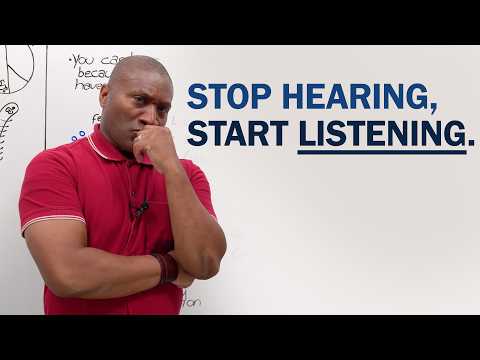
Turn your ears into your most powerful tool for English fluency. Many English learners focus entirely on speaking, but research shows we spend up to 50% of our communication time listening. If you can’t listen effectively, you can’t learn patterns, grammar, or vocabulary naturally. In this class, part of my 4-part core skills series, I break down the science and art of listening in English. You will learn the difference between passive hearing and active listening. I also cover the three specific types of listening – Task, Relational, and Critical –and how to switch between them to improve your relationships and comprehension. Finally, I explain the “Juggling Theory” of conversation to help you manage information flow like a pro. https://www.engvid.com/listen-better-learn-faster-practical-listening-skills/
Watch the next video in this series: https://youtu.be/y89OLiozqNY
Watch the full course: https://www.youtube.com/playlist?list=PL1MxVBsQo85qLby7rrLVVLNlWMLYoLjJZ
In this lesson:
0:00 Listening is not what you think!
1:26 Passive Listening vs. Active Listening
4:37 Listening is part art and part science.
5:37 We are born listeners.
6:46 Listening is pattern recognition.
9:01 Types of Listening
12:52 Listening is a two-way interaction
17:35 Tip #1
19:13 Tip #2
21:19 Tip #3
Transcript:
Hey, E, what are you listening to? Hi. James from engVid. This is a special video, part of a four-part series we have on the four core things you need to learn in order to learn language. Okay? This one's on listening, and we're going to go to the board and talk to E and see what he's listening to. That's an ear, by the way. Okay, so, listening. It seems that listening takes up to 40-50% of our day, so in our communication journey through a day, we will spend 40-50% listening. That might surprise some of you because you go, "I talk all the time." Actually you don't. You have to... You do talk, but you talk to different people, and they need to talk. If you talk all the time, you'd be the only one. So we spend half our time actually in listening, and a little less time in speaking because we do have more than one person we talk to. But this does tell us how important listening is to the learning process. I find it interesting because many students, they're more interested initially in speaking because it makes you feel good when you can speak and people understand you, but they tend to forget that when we all started out as children, we started listening, not speaking. And that's why we're going to take the time on this lesson to make sure you get a deep understanding to blow up your ability to listen and therefore learn. All right? Let's go to the board.
All right. So, most people think they're incred... Okay. And I'm talking about in their original language, so I speak English, you might speak Japanese, you might speak French, you might speak Haitian, whatever you speak. Almost everybody thinks they're really good at listening, and they don't think they need any training on it because they have two ears, so it's obvious. Right? That's what I call "passive listening". You think you can hear because you have ears. Notice I didn't say "listen", I put "hear", because you're right, you can hear. If I go... You can hear that. That's not listening. Listening involves focus. Okay? That focus means engage or put your brain into the situation and pay attention. This is why there's so much miscommunication, not even in language learners, people speaking the same language don't understand each other because they actually don't listen. This lesson is to help you not only increase your language learning ability, but to make your everyday listening skills better, which will in turn, of course, make your language skills better. Right? Worth the time, especially when you're going to spend 50% of your life listening to other people.
Okay, so if "passive" is just because I have ears, I can hear, what is "active"? Well, "active", look at this, you understand what someone means. When you hear them, you can hear the words that they're saying, but it doesn't mean you actually understand what they mean. You only... Because we usually listen to ourselves a lot, we understand what we think they mean. And that's where you get what we call "miscommunication". Right? And it's hard to have something called "empathy", and empathy is an ability to feel what someone else feels. Right? And to understand the pain they have, and to go, "Oh my gosh, I got it. Oh yeah, I could understand why you would feel that way." You can't do that if you can't actually understand what they're saying. Right? Now, the other thing about active listening, which is great, is you make people feel heard. Notice how both of these things have nothing to do with you. Hmm? Yeah, I know, you're the star of your show, but we're listening because we want to create relationships. […]