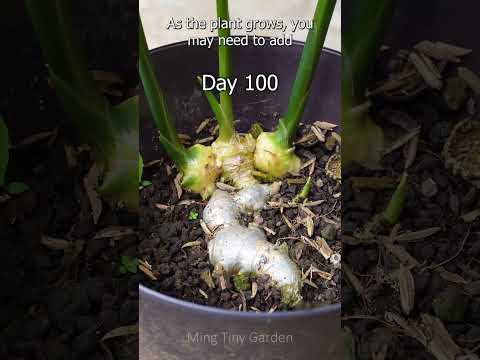
影片說明
Growing ginger in small pots can be a rewarding and space-efficient way to enjoy this flavorful and aromatic spice. Here's a step-by-step guide on how to grow ginger in small pots:
1. Select a suitable pot: Choose a pot that is at least 5 inches in diameter and 6 inches deep. Ensure the pot has drainage holes at the bottom to prevent waterlogging, as ginger does not tolerate waterlogged soil.
2. Choose the right ginger rhizomes: You can buy ginger rhizomes from a grocery store or nursery. Look for plump, healthy rhizomes with well-developed "eyes" or growing points. Each rhizome can be cut into smaller pieces, with each piece having at least one eye.
3. Prepare the potting mix: Use a well-draining potting mix that is rich in organic matter. You can create a mix by combining equal parts potting soil, compost, and perlite or sand to improve drainage. Ginger prefers slightly acidic soil with a pH of 6.0 to 6.8.
4. Plant the ginger rhizomes:
a. Fill the pot with the potting mix, leaving about 2 inches of space at the top.
b. Cut the ginger rhizomes into smaller pieces, making sure each piece has at least one eye (a small, green bud).
c. Plant the ginger rhizome pieces about 2 inches deep in the soil, with the eyes facing up.
5. Watering: Keep the soil consistently moist but not waterlogged. Water the ginger when the top inch (2.5 cm) of soil feels dry. Be cautious not to overwater, as ginger roots are prone to rot in soggy conditions.
6. Light: Ginger prefers partial to full shade, making it suitable for indoor growing. Place the pot in a location with indirect sunlight or filtered light. Avoid exposing it to harsh, direct sunlight, especially during the hottest part of the day.
7. Temperature: Ginger thrives in warm and humid conditions. Maintain a temperature between 75°F to 85°F (24°C to 29°C) if possible.
8. Fertilize: Feed your ginger plant with a balanced, all-purpose liquid fertilizer diluted to half strength every 4-6 weeks during the growing season (spring and summer).
9. Mulch: Apply a layer of organic mulch, like straw or shredded leaves, on top of the soil to help retain moisture and suppress weeds.
10. Repotting: As your ginger plant grows, you may need to transplant it to a larger pot to accommodate its expanding root system. This is typically necessary every 1-2 years.
11. Harvesting: Ginger is ready to harvest when the plant is around 8-10 months old. You can gently dig up the rhizomes, being careful not to damage the plant. Harvest only what you need, leaving some rhizomes in the pot to continue growing.
By following these steps, you can successfully grow ginger in small pots, providing you with fresh ginger for culinary use and a lovely green plant to decorate your indoor space.
- - - -
Cleaning ginger after harvesting is an important step to prepare it for storage and culinary use. Here's how to clean harvested ginger:
1. Harvest the ginger: Carefully dig up the ginger plant, taking care not to damage the rhizomes. Use a garden fork or a small shovel to gently lift the ginger from the soil.
2. Remove excess soil: Shake or gently brush off any loose soil from the ginger rhizomes. Do not wash them immediately, as moisture can encourage mold growth during storage.
3. Trim the ginger: Using a clean, sharp knife or scissors, trim off any long roots and remove any damaged or discolored portions of the ginger rhizomes. Trim close to the rhizome to minimize waste.
4. Wash the ginger: After removing excess soil and trimming, you can rinse the ginger rhizomes under cold, running water to remove any remaining soil. Use your fingers or a soft brush to gently scrub the surface. Be gentle to avoid damaging the skin.
5. Dry the ginger: Pat the ginger dry with a clean cloth or paper towel. It's essential to remove all moisture to prevent mold or rot during storage.
6. Optional peeling: Depending on your culinary preferences, you can peel the ginger to remove the outer skin. You can use a vegetable peeler or the edge of a spoon to scrape off the skin. Keep in mind that some recipes may call for peeled ginger, while others use it with the skin intact for added flavor.
7. Store the ginger: Store the cleaned ginger in a cool, dry place. You can keep it in a paper bag, a breathable container, or wrap it in a paper towel and place it in a plastic bag with small holes for ventilation. Ginger can be stored this way for several weeks.
8. Freezing (optional): If you want to store ginger for a more extended period, consider freezing it. Slice or chop the ginger into small pieces, place them in an airtight container or freezer bag, and store them in the freezer. Frozen ginger can be grated directly into recipes without the need to thaw.
By following these steps, you can clean harvested ginger effectively and ensure it stays fresh for your culinary endeavors.