影片說明
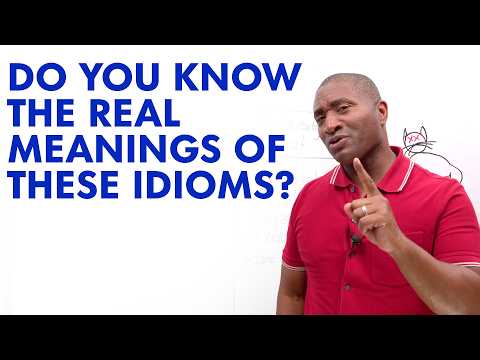
Learn the real meanings and origins of 5 common English idioms, like “blood is thicker than water” and “curiosity killed the cat.” Learn how the idioms and their meanings have changed over time and how you can use these surprising facts to start engaging conversations. Perfect for intermediate and advanced learners who want to sound smarter in English. Watch, learn, and impress your friends with these fascinating idiom facts! Then take the quiz: https://www.engvid.com/advanced-english-5-idioms-with-unexpected-histories/
More of my videos that will help you have better conversations:
Conversation skills: 5 questions to make you the most interesting person in the room https://youtu.be/hOXNssFPEnM
3 keys to small talk https://youtu.be/gbfV0b8Tn0A
In this lesson:
0:00 5 Idioms that mean the OPPOSITE of what they used to!
1:42 "Blood is thicker than water."
5:24 "a few bad apples"
7:08 "Jack of all trades, master of none"
9:47 "Great minds think alike."
12:37 "Curiosity killed the cat."
15:07 Review
TRANSCRIPT:
[Humming] E! What's confusing you? Oh, hi. James from engVid. Listen. E. wants to do this lesson with you, and it's kind of interesting. Because a lot of times, you'll do idioms. People will teach you idioms, right. But he has an idea where we can use idioms as conversation starters. Now how would we do this? Because everybody knows the idioms, right? "It's raining like cats and dogs." How do you start a conversation like that? You can't, really. If it's raining, they're going to go, "Duh, yeah, it's raining."
But what happens if we gave you five idioms that people probably don't know the total idiom? Because it's been changed through time. And with that change through time, sometimes it means the exact opposite of what they're using it for. And that is a cool conversation starter. You have a depth of knowledge that you can share with someone else.
So I'm going to give you the first one when we go to the board. Now, I'm going to give you the idiom as it's supposed to be, okay? But then I'm going to write what people say, so you can see the difference between what is said and what it used to be, and then we can quickly discuss why it might be the opposite or it has greater information that's given, and you'll see people go, "Hmm. I never knew that." And that makes you look smart. And that's what we want. Not that you're smart. That people take interest in you because you can bring something new to them. So let's go to the board, shall we?
Okay, so here is some blood. I know, not pretty, but some blood, and there's some water causing ripples. So we got blood and water. Why am I showing that? Well, in Western society, specifically North American and, you know, English society, or, you know, England, the island, the British Isles, they love to say this particular idiom. However, this was the original. "The blood of the covenant is thicker than the water of the room, the room, the womb." A womb is like a room, but not really. Okay, so a lot of complicated language here. So you might be like, "What the heck?" Well, when you have a covenant, it's sort of people coming together and making a vow or a promise to each other to be like brothers. Right? So you say, "You are like my brother, and I'm your brother. We will work together." It's a covenant. It's the agreement we make with each other. We are not related. Right? So we make an agreement with each other to work as family. Okay? But this is something you find and you choose. This is the important part. Right? Now, when you look at "water of the womb", I've gained a bit of weight, so just leave me alone. Okay? I'm not going on Ozempic, whatever. The womb is when a woman is pregnant, she has a big belly. Okay? Well, you're inside of that. And when you're inside the womb, you share your mother's water, because it's water. So what this is saying, "The blood of the covenant is thicker than the water of the womb", is kind of true, because blood is... got more stuff in it than water. But the idea is the friends that you make... the friends that you make and the people you call that you decide to be your family actually have a stronger connection for you and are better than the water of the womb than family you have. So it's not just your mother. But they're saying if you have family that you were born into, and you have family that you have created, decided to create through people from work or friends that you have met, those bonds are stronger and they should be stronger, because you decided to make them. When you were born into a family, you were just born into it. But when you make a decision, you've consciously thought about it, so they probably share more of your values. Yeah? Cool?
Well, here's the funny thing. [Clears throat] The saying today is this. "Blood is thicker than water". Now, we know blood is thicker than water, but they've changed it to mean that family […]