影片說明
The Painted Houses of Tiébélé: A Living Canvas of Kassena Culture
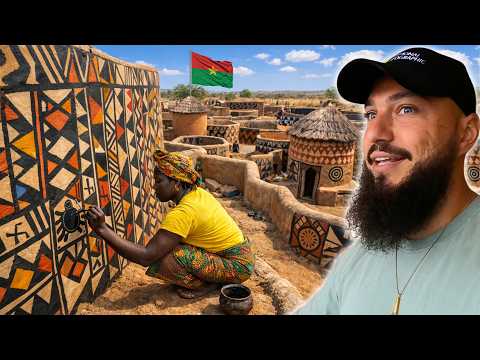
In the far south of Burkina Faso, near the border with Ghana, lies the village of Tiébélé. It is home to the Kassena people, one of the oldest ethnic groups in the region, and famous for its painted houses. These earthen buildings, covered in intricate geometric and symbolic designs, are more than decoration. They are a living expression of Kassena history, identity, and belief, carefully maintained by the community, especially by women.
The architecture of Tiébélé reflects both environment and tradition. Kassena houses are built from mud, clay, straw, and cow dung—materials that are abundant and well suited to the hot, dry climate. Thick earthen walls help keep interiors cool during the day and release stored heat slowly at night. The buildings are arranged in dense compounds surrounded by low walls, with narrow doorways and passages. This layout once helped protect families from attacks and wild animals, and today still offers privacy and a strong sense of enclosure. Circular and rectangular forms, low doors, and flat or gently sloping roofs are all practical solutions refined over many generations.
What makes Tiébélé so distinctive is the painting that transforms these practical homes into works of art. After construction, the walls are smoothed with stones and plastered to create a solid surface. Women then apply natural pigments—reds and browns from iron-rich earth, black from charcoal or manganese, and white from kaolin clay. With just a few colors, they create complex patterns: zigzags, diamonds, checkerboards, and stylized shapes inspired by animals, tools, and daily life.
These designs have meanings that go beyond aesthetics. Some patterns are linked to protection and are believed to shield the household from misfortune or evil spirits. Others point to fertility, harmony, or the continuity of the family. Certain motifs can indicate the social status of the residents, their clan, or the function of a particular building, such as a dwelling, granary, or ritual space. In this sense, the painted walls form a visual language. Community members who understand the symbols can “read” the stories and messages displayed on the houses.
The way these paintings are made is just as important as the finished result. Decorating the houses is traditionally women’s work and is often done collectively. Older women lead the process, choosing designs, mixing pigments, and guiding the younger women and girls who assist them. As they paint, they pass on skills and knowledge: how to prepare the walls, how to apply and burnish the colors, and what each symbol represents. The act of painting becomes a form of education and cultural transmission, strengthening ties between generations and reinforcing shared values and beliefs.
The painted houses also show how closely culture, environment, and daily life are connected. The use of earth, dung, plant products, and locally sourced minerals reflects deep knowledge of the local landscape. Techniques like polishing and sometimes finishing the walls with natural substances help protect them from rain and wear. At the same time, the spatial organization of the compounds responds to everyday needs—providing areas for cooking, sleeping, storing grain, welcoming visitors, and observing rituals. Art is not separated from ordinary life; it covers the very buildings where people live and work.
Despite their beauty and importance, the painted houses of Tiébélé face challenges. Because the buildings are made of earth, they require frequent maintenance. Heavy rainfall can damage walls and wash away pigments, forcing residents to repair and repaint them regularly. Economic pressures, changing lifestyles, and migration to cities can also weaken the tradition, as fewer young people remain in the village to learn and continue the practice. Meanwhile, growing international attention—from tourism, photography, and media—brings both benefits and risks. Visitors can provide valuable income, but if tourism is not managed carefully, it may disrupt daily routines or encourage changes aimed more at pleasing outsiders than serving local needs.
Even with these pressures, Tiébélé remains a powerful example of how architecture and art can express a community’s worldview. The painted houses embody Kassena history, social organization, and spirituality, while still fulfilling basic needs for shelter and storage. They challenge narrow ideas of what counts as “art” by showing that remarkable creativity can be found in ordinary homes and courtyards. In a world where many buildings are becoming standardized and disconnected from local cultures, Tiébélé demonstrates that it is still possible to build in ways that are deeply rooted in place and tradition.